 Reviews

 Proudly American

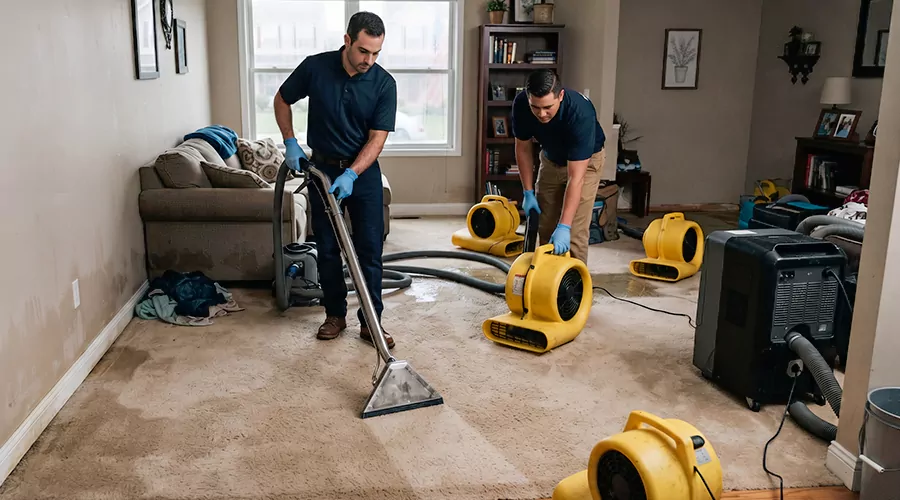
Wet carpet should be extracted and dried within 24 to 48 hours after water damage when the water source is clean, because prolonged moisture raises the chance of mold growth. The EPA recommends using water extraction with dehumidification and airflow to dry both the carpet and its backing.
Drying the carpet surface isn't enough. Padding and the subfloor can hold moisture long after the fibers stop feeling wet.
Successful wet carpet drying therefore depends on removing as much liquid as possible first. The materials beneath the carpet must then be checked before the room is considered dry.
What Should You Do First When Carpet Gets Wet?
The first step is to stop the source and determine what type of water reached the carpet. A small clean-water leak can sometimes be dried in place. Sewage or outdoor floodwater changes the situation because contamination can make normal carpet drying inappropriate.
Start with these actions:
- Stop the leak when it is safe.
- Keep people away from the wet area.
- Check for electrical hazards.
- Identify where the water came from.
- Move dry furniture away from the wet carpet.
- Photograph the affected area.
- Begin extraction as soon as conditions are safe.
Never use electrical equipment while standing in water. CDC guidance says power shouldn't be switched on or off from a wet location.
Carpet water damage can extend past the area that looks visibly wet. Water spreads through padding and can travel beneath furniture before the carpet surface shows the full boundary.
Check several feet beyond the obvious wet spot before setting up drying equipment.
Can Wet Carpet Be Saved After Water Damage?
Carpet can often be saved after a recent clean-water loss when extraction begins quickly and the carpet can be dried thoroughly. The chance of saving it drops when sewage is involved or moisture has remained trapped for an extended period. Mold growth also changes what can remain.
Use the water source as your first guide:
| Water Source | Carpet Outlook | Main Concern |
|---|---|---|
| Clean supply-line leak | Often salvageable | Fast drying |
| Clean appliance supply leak | Often salvageable | Wet padding |
| Gray water | Depends on exposure | Contamination |
| Sewage backup | Removal is often safer | High contamination |
| Outdoor floodwater | Removal is often safer | Unknown contaminants |
EPA guidance specifically addresses clean-water damage when recommending that carpet and backing be dried within 24 to 48 hours. CDC guidance is more cautious after flooding and advises discarding materials that cannot be cleaned or dried quickly.
A carpet that became wet from a broken supply line isn't the same situation as one soaked by a sewer backup.
Do not use the carpet's color or odor alone to judge contamination.
How to Dry Wet Carpet After Water Damage Step by Step
The fastest safe method is to remove bulk water first and then expose wet layers to moving dry air. A dehumidifier removes the moisture released into the room. The carpet shouldn't be reinstalled or covered until the padding and subfloor have also reached a dry condition.
Follow this sequence.
Step 1: Remove Standing Water
Use a wet-dry vacuum or water extraction machine for clean-water losses when electrical conditions are safe.
Work slowly across the wet area instead of making one quick pass. Several extraction passes can remove much more water from the fibers.
Do not use a normal household vacuum.
EPA guidance recommends water extraction vacuuming as the first drying action for wet carpet.
Carpet flood water removal drying works better when liquid extraction is completed before relying on evaporation. A fan takes much longer to remove water that could have been physically extracted.
Step 2: Move Furniture Off the Carpet
Furniture can trap moisture beneath its legs while also slowing airflow across the carpet.
Move lightweight items into a dry room. Heavy items that cannot be moved may need to be lifted temporarily from the damp surface.
Pay special attention to:
- Wood furniture legs
- Upholstered furniture
- Storage boxes
- Rugs placed over carpet
- Floor cushions
- Electronics near the wet area
Do not place wet furniture on dry carpet in another room.
A clean plastic barrier can temporarily separate furniture legs from damp flooring while the area is being cleared.
Step 3: Check the Carpet Padding
Padding often holds much more water than the carpet surface. A carpet can feel almost dry while the pad underneath remains saturated.
Carefully lift an accessible carpet edge after extraction if doing so will not damage the installation.
Check whether the padding is:
- Damp
- Saturated
- Breaking apart
- Producing odor
- Contaminated
- Already showing visible growth
Heavily saturated padding often needs removal because trapped water slows the drying of both the carpet and subfloor.
Water damage carpet removal may therefore involve only the padding in some clean-water situations rather than automatically discarding the carpet itself.
Step 4: Inspect the Subfloor
The floor beneath the padding must also dry.
Wood subflooring can absorb moisture around seams. Concrete can also remain damp after the carpet above it has improved.
Look for:
- Darkened wood
- Swollen edges
- Moisture around seams
- Soft areas
- Unusual odor
- Condensation beneath lifted carpet
Don't reinstall padding over a damp subfloor.
The hidden surface is often the part that determines how long the drying process actually takes.
Step 5: Create Strong Airflow
After extraction, use fans or air movers to increase evaporation from the wet materials.
Position airflow across the carpet rather than pointing every fan at one small spot. Keep interior doors open when doing so does not spread contamination into another area.
The EPA recommends fans to accelerate carpet drying after water has been extracted.
Flooded carpet drying works best when air can reach both the carpet and the materials underneath.
A lifted carpet edge can allow more airflow beneath the surface when the installation permits it.
Step 6: Run a Dehumidifier
Air movement transfers moisture from the carpet into the room air. A dehumidifier then removes that moisture from the air so evaporation can continue.
Run the dehumidifier continuously during the drying period according to its operating instructions.
Keep windows closed when outdoor air is humid. Open windows only when outside conditions are actually drier than the room.
EPA guidance recommends keeping indoor relative humidity below 60 percent when possible. A range of 30 to 50 percent is preferred for normal moisture control.
Wet carpet drying can stall when fans run in a closed humid room without enough dehumidification.
Step 7: Dry the Padding and Subfloor
The next goal is to dry every affected flooring layer rather than only the visible carpet.
When padding has been removed, direct airflow across the exposed subfloor. Continue dehumidification while monitoring how the material changes.
Do not rush to put the carpet back down.
If the subfloor remains damp then moisture can migrate back into the newly dried carpet.
Step 8: Clean the Carpet After It Is Dry
Carpet cleaning after water damage should take place only after the water source and drying problem have been addressed.
A carpet exposed to clean water may need cleaning because the water can move ordinary soil through the fibers. Follow the carpet manufacturer's care instructions.
Water damage carpet cleaning should not be used as a substitute for drying.
Steam cleaning a still-saturated carpet adds more moisture to a floor that is already struggling to dry.
How Long Does Wet Carpet Take to Dry?
Wet carpet commonly takes 24 to 72 hours to dry after most of the water has first been extracted. Drying time depends on saturation and indoor humidity. Padding or subfloor moisture can extend the process even after the exposed carpet fibers feel dry.
A general timeline looks like this:
| Condition | Approximate Drying Time |
|---|---|
| Light surface wetting | 12 to 24 hours |
| Moderate clean-water saturation | 24 to 48 hours |
| Wet carpet with saturated pad | 48 to 72 hours |
| Wet subfloor beneath carpet | Several days |
| Extensive water damage | Several days or longer |
The EPA recommends getting wet carpet and backing dry within 24 to 48 hours when possible because that reduces the chance of mold growth.
The 24 to 48 hour guidance is a target for action rather than a guarantee that every heavily soaked carpet will become completely dry in that period.
What matters is that active extraction and drying begin quickly.
How Can You Tell When Carpet Is Completely Dry?
Carpet is dry only when the fibers and padding have dried along with the floor underneath. Touching the surface isn't a reliable test because moving air can dry the top first. Moisture trapped underneath can remain for many additional hours.
Check these areas:
- Carpet surface
- Carpet backing
- Padding
- Tack-strip area
- Baseboards
- Subfloor
- Nearby drywall
A moisture meter can help compare the affected subfloor with a similar dry location elsewhere in the home.
Use a hygrometer to watch indoor relative humidity during water damage carpet drying.
A simple smell check is also useful after the area has been closed for several hours. A new musty odor deserves investigation because EPA guidance notes that a moldy odor can signal hidden growth.
What Happens if Wet Carpet Isn't Dried Fast Enough?
Wet carpet can begin supporting mold when moisture remains long enough. Padding can also retain moisture against the subfloor. The longer these layers stay wet the more likely removal becomes. Delayed drying can therefore turn a flooring problem into a larger water-damage project.
The progression commonly looks like this:
| Time After Water Damage | What May Be Happening |
|---|---|
| First few hours | Water moves through carpet into padding |
| First 24 hours | Subfloor can remain saturated |
| 24 to 48 hours | Mold risk increases |
| 48 to 72 hours | Odor or material changes can develop |
| Several days | Removal becomes more likely |
EPA guidance states that most wet materials dried within 24 to 48 hours do not develop mold.
Carpet water damage cleanup becomes more involved once moisture reaches walls or nearby flooring.
A shallow layer of water can therefore cause more damage than expected when it spreads beneath a large carpeted area.
When Should Wet Carpet Be Replaced?
Replacement becomes more likely when contaminated water has soaked the flooring or mold is already growing. Carpet that cannot be completely dried also becomes a poor candidate for reuse. Padding often requires removal sooner because it holds large amounts of moisture beneath the visible floor covering.
Replacement deserves consideration when:
- Sewage soaked the carpet.
- Outdoor floodwater entered the room.
- Mold is visible.
- A musty odor remains after drying.
- Padding has broken apart.
- Water remained for several days.
- The carpet backing has separated.
- Subfloor damage is extensive.
- The carpet cannot be dried thoroughly.
- Contamination cannot be removed safely.
CDC guidance recommends removing or replacing carpets that were soaked and cannot be dried quickly after flooding.
Carpet flood cleaning isn't the right response when the material has absorbed highly contaminated water.
Cleaning cannot reverse physical deterioration in the carpet backing or padding.
How Much Can Wet Carpet Damage Cost in 2026?
Costs depend on whether the carpet can be dried or must be replaced. A small clean-water DIY drying project can cost as little as $10 to $50 for supplies when equipment is already available. Broader water restoration averages about $3,868 in 2026.
If the carpet cannot remain, current pricing provides this comparison:
| Work Needed | Typical 2026 Cost |
|---|---|
| Small DIY clean-water drying | About $10 to $50 |
| Wet carpet removal | About $1.20 to $1.55 per sq. ft. |
| New carpet installation | About $3 to $11 per sq. ft. |
| Water restoration overall | $450 to $16,000 |
Current carpet replacement costs range from about $780 to $2,812 for many projects. A typical 330-square-foot living room averages around $1,778.
Carpet water damage repair can cost much less when the carpet is saved and only a small damaged section needs attention.
The financial advantage of fast drying is therefore easy to see. Saving a sound carpet can avoid both removal and new-flooring costs.
What Warning Signs Mean the Carpet Is Still Too Wet?
Persistent moisture often appears through odor or physical changes after the obvious puddle disappears. The carpet may also feel cool because evaporation is still occurring. Changes near baseboards can show that water traveled beyond the flooring area.
Watch for these 10 warning signs:
- Carpet feels cool several hours later.
- Padding squishes when stepped on.
- A musty odor develops.
- Baseboards begin swelling.
- Carpet edges remain darker.
- Tack strips show moisture.
- Wood underneath feels damp.
- Indoor humidity remains high.
- Stains return after drying.
- Carpet backing begins separating.
A single dry surface reading doesn't prove that every flooring layer is ready.
Check several locations around the edge and center of the affected area.
What Can You Safely Check Yourself?
A safe DIY test is to compare moisture beneath the affected carpet with a known dry area. Lift an accessible edge only if the water source was clean and the carpet can be handled safely. Check the padding before looking at the subfloor beneath it.
Use this process:
- Choose an unaffected carpeted area for comparison.
- Feel the padding beneath both areas.
- Check the subfloor with a moisture meter when available.
- Record the affected reading.
- Repeat the test several hours later.
- Continue drying while readings are falling.
Do not pull back carpet exposed to sewage or unknown floodwater just to inspect it.
The goal of this test is to confirm drying progress rather than decide that a contaminated carpet is safe.
When Should You Call a Professional?
Professional help is appropriate when the carpet covers a large saturated area or the padding can't be dried quickly. Sewage and outdoor floodwater are stronger reasons to stop DIY cleanup. Hidden moisture inside subflooring can also require drying equipment or measurements beyond what household fans can provide.
Consider professional help when:
- Several rooms are wet.
- Water reached electrical equipment.
- Sewage entered the room.
- Outdoor flooding caused the damage.
- Carpet has been wet longer than 48 hours.
- Padding is heavily saturated.
- Hardwood or plywood beneath it remains wet.
- Mold is visible.
- A musty odor continues.
- Drying progress has stopped.
- Water has entered nearby walls.
- You cannot identify how far the moisture spread.
Water damage carpet cleaning services may include extraction when the contamination level allows the carpet to remain.
A larger water loss can require higher-capacity air movers or dehumidifiers. Moisture readings can then be tracked until the subfloor reaches an acceptable dry condition.
How Can You Reduce Future Carpet Water Damage?
Future damage can be reduced by catching leaks before water spreads beneath large carpeted areas. Supply hoses and nearby plumbing deserve regular checks. Leak alarms can also provide an early warning in rooms where water might otherwise travel unnoticed beneath furniture or flooring.
Use this maintenance routine:
- Check washing-machine hoses several times each year.
- Inspect water-heater connections regularly.
- Look under sinks each month.
- Test sump pumps before storm season.
- Place leak alarms near appliances.
- Repair slow plumbing leaks promptly.
- Check carpet after major indoor spills.
- Keep indoor humidity below 60 percent.
- Investigate musty odors quickly.
- Learn where the main water shutoff is.
Fast detection can turn a whole-room problem into a small local drying job.
The EPA continues to recommend drying wet materials within 24 to 48 hours when possible.
Conclusion
Wet carpet can often be saved after clean-water damage when extraction starts quickly and every flooring layer is dried. The surface alone isn't a reliable guide because padding and subflooring can stay wet underneath. Begin drying within the first 24 to 48 hours when possible. If contamination or hidden moisture makes the situation uncertain, professional assessment can help. This week, check leak-prone appliances and locate your main water shutoff.
Frequently Asked Questions
Can you leave wet carpet to air dry?
A slightly damp carpet may dry with airflow but heavily soaked carpet needs extraction first. Leaving standing water to evaporate wastes time and can leave the padding saturated.
Should carpet padding be replaced after water damage?
Padding may be saved in limited clean-water situations when it dries quickly. Heavily saturated or contaminated padding is more likely to need removal.
Can a fan dry wet carpet overnight?
A fan can speed evaporation but it may not dry saturated padding or subflooring overnight. Dehumidification and extraction usually make the process much faster.
Can you dry carpet without pulling it up?
Sometimes. A small clean-water loss may dry in place when the padding and subfloor weren't heavily saturated. Larger losses often require access beneath the carpet.
Does wet carpet always grow mold?
No. EPA guidance says mold usually doesn't develop when wet materials are dried within 24 to 48 hours. Longer moisture exposure increases the risk.
Can carpet be saved after a flood?
It depends on the water source. Clean-water exposure may be salvageable while sewage or outdoor floodwater often makes replacement the safer option.